
By Tabitha Caswell
At the Heart of Canadian Crop Innovation: Syngenta’s Honeywood Research Facility
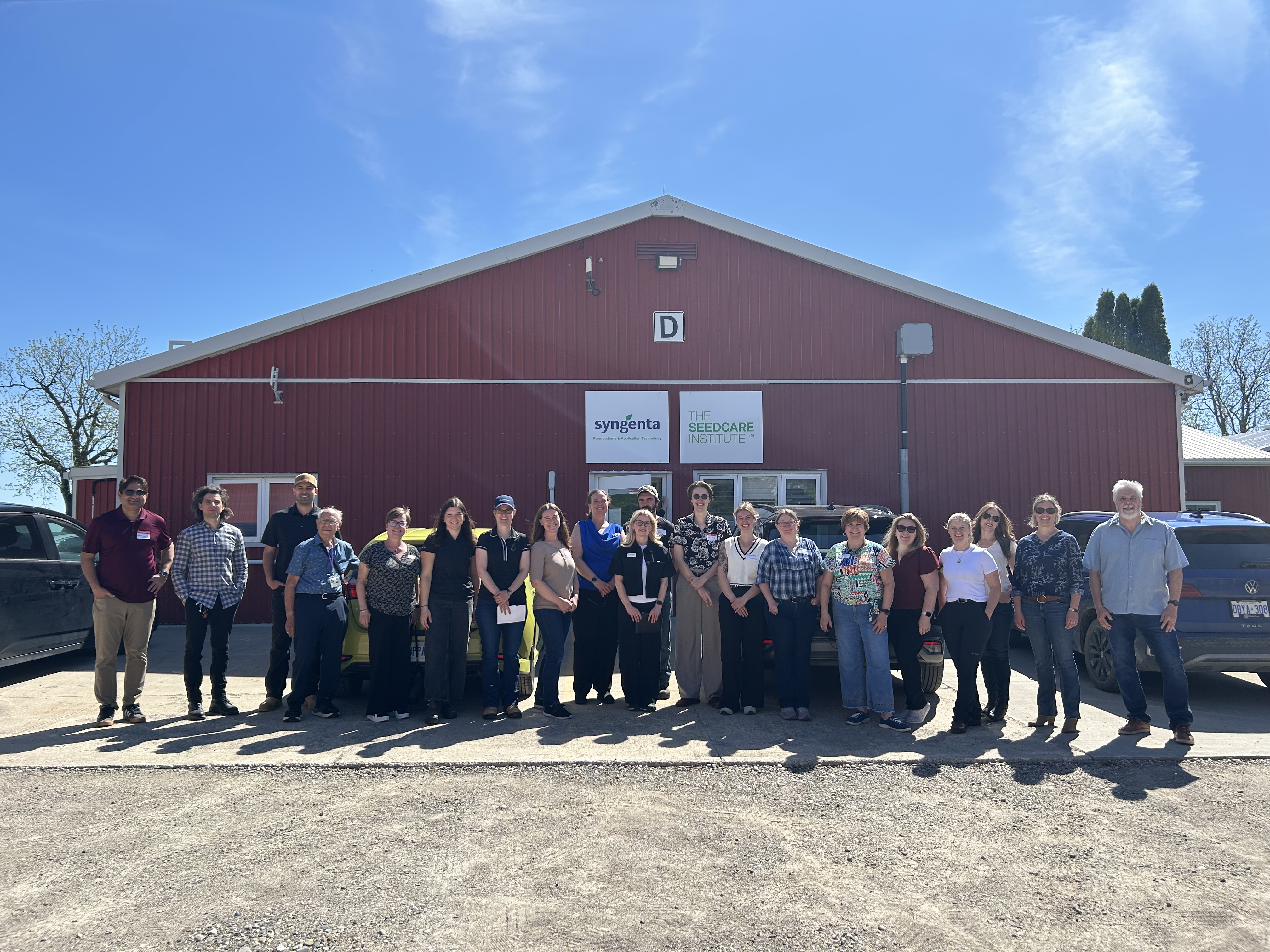
Before settling into AGM business, ECFWA members had the opportunity to visit Syngenta Canada’s Honeywood Research Facility.
Located on a 100-acre farm near Plattsville, Ontario, the facility is named for the highly fertile Honeywood silt loam soils it sits on. While the property’s agricultural history spans more than a century, it has served as a dedicated research site since 1975. Today, Honeywood is a national hub for agricultural research and product validation, supporting the development of technologies used by growers across Canada.
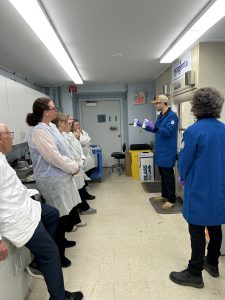
Hosted by Abhi Deora, Crop Protection Field Development Manager for Eastern Canada, members toured the laboratories that support Syngenta’s field development, pathology, seedcare, and formulation and application technology programs.
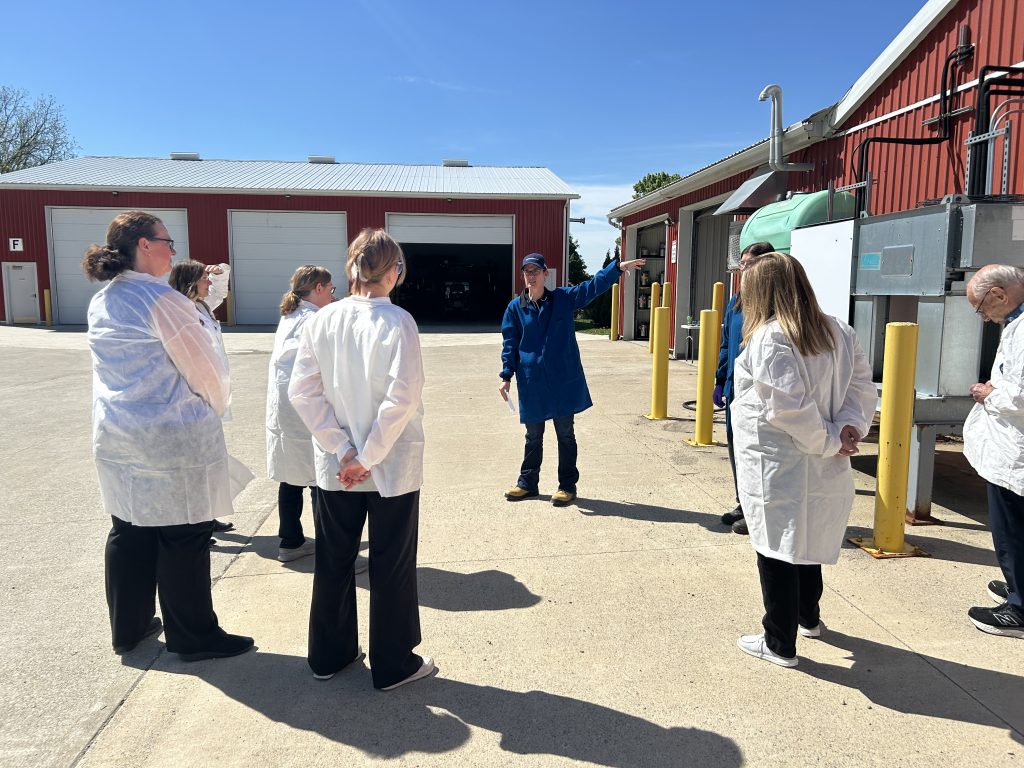
During the tour, researchers demonstrated the methods used to evaluate how products behave in real-world conditions. From testing the stability of tank mixes after extended storage to assessing spray coverage through different nozzle types, every detail is examined to help ensure products perform as intended in the field.
Members also visited the Canadian Seedcare Institute on site, where seed treatments are tested for consistency, storage stability, and performance in diverse growing conditions. Researchers work closely with partners across Canada and internationally to validate results and ensure products meet regulatory and agronomic requirements.
The tour also highlighted Syngenta Canada’s Zero Hunger Challenge, an initiative focused on addressing food insecurity in rural communities. Through harvest donations and employee-led efforts, the Honeywood facility has contributed thousands of pounds of fresh produce to local food banks.
The visit offered a fascinating glimpse into the science and collaboration that support modern Canadian crop production, while showcasing the extensive work that happens long before a product reaches a farmer’s field.
Exploring Agricultural Misinformation in the Digital Age

Following the AGM, ECFWA members heard from Sid Heeg, a PhD candidate in Sustainability Management at the University of Waterloo whose research examines agricultural misinformation on social media.
Complementing Heeg’s academic work, lived experience growing up on a family-run farm offers a practical perspective on how information, including misinformation, spreads in today’s digital world.
Social media was once promoted as a powerful tool for farmers to connect, learn, and share their stories. While those benefits remain, Heeg says the digital world has become increasingly complex for producers. Noting that Canada is home to some of the world’s most active social media users, this high engagement rate creates both opportunities and challenges for agricultural communication.
During the presentation, Heeg explained how information can become distorted as it is shared, interpreted, and re-shared online. Common topics affected by misinformation include animal welfare, pesticide use, GMOs, food production practices, and environmental impacts. The root cause is not always malicious intent but rather gaps in knowledge, understanding, or access to credible information.
Heeg shared preliminary findings from a recent survey of 117 farmers that explored how misinformation affects producers. Responses pointed to impacts on mental health, public trust, and farm decision-making. Many farmers are becoming aware of these issues, choosing not to engage with misinformation at all, citing frustration, fatigue, and a desire for self-preservation.
Another key takeaway was that misinformation is not simply a consumer issue. Farmers themselves can encounter and inadvertently share inaccurate information, making access to credible sources and expert guidance increasingly important.
As conversations about agriculture increasingly take place online, Heeg emphasized the need for trusted information sources, improved digital literacy, and ongoing discussion about who should bear responsibility for addressing misinformation in Canada’s agri-food sector.
For more information on this topic, contact Sid Heeg via email at: syheeg@uwaterloo.ca

Leave a Reply
You must be logged in to post a comment.